
Sri Lanka is a welcoming country and most visits are trouble-free. A little preparation goes a long way: know the emergency numbers, watch for the common scams, respect the sea and the roads, and sort out your health and insurance before you fly.
Quick answers
- Emergency numbers: Police 118 or 119, Ambulance 1990, Fire and rescue 111.
- Biggest everyday risks: road accidents, strong currents at some beaches, mosquito-borne illness such as dengue, and petty theft or card fraud.
- Insurance: essential. Private hospitals are expensive, and serious cases may need transfer to Colombo or a flight home.
- Laws that catch visitors out: drugs (including cannabis), and disrespect to Buddhist images, including Buddha tattoos.
Avoid trouble with Buddha images and drugs
- Visitors with visible tattoos of the Buddha have been refused entry or deported. Cover them up.
- Don't pose for photos with your back to a Buddha statue or touch statues. Disrespecting Buddhist images can lead to arrest.
- Drug offences, including cannabis, carry severe penalties and long jail sentences. Bags are scanned at the airport, including in transit.
Emergency numbers
| Service | Number |
|---|---|
| Police | 118 or 119 |
| Ambulance (1990 Suwa Seriya, free) | 1990 |
| Accident Service, National Hospital Colombo | 011 269 1111 |
| Fire and rescue | 111 |
| Tourist Police | 011 242 1052 |
1990 Suwa Seriya is a free, island-wide emergency ambulance service run under the Ministry of Health. It takes patients to hospital in an emergency; it can't be booked in advance for non-emergency trips. Save your embassy or high commission's number on your phone too.
Back-up plan
- Note the numbers of private hospitals' ambulance services near where you're staying.
- If no ambulance is available quickly, a taxi or ride-app driver nearby may be the fastest way to get to hospital, so keep a number or the app handy.
Common scams and petty crime
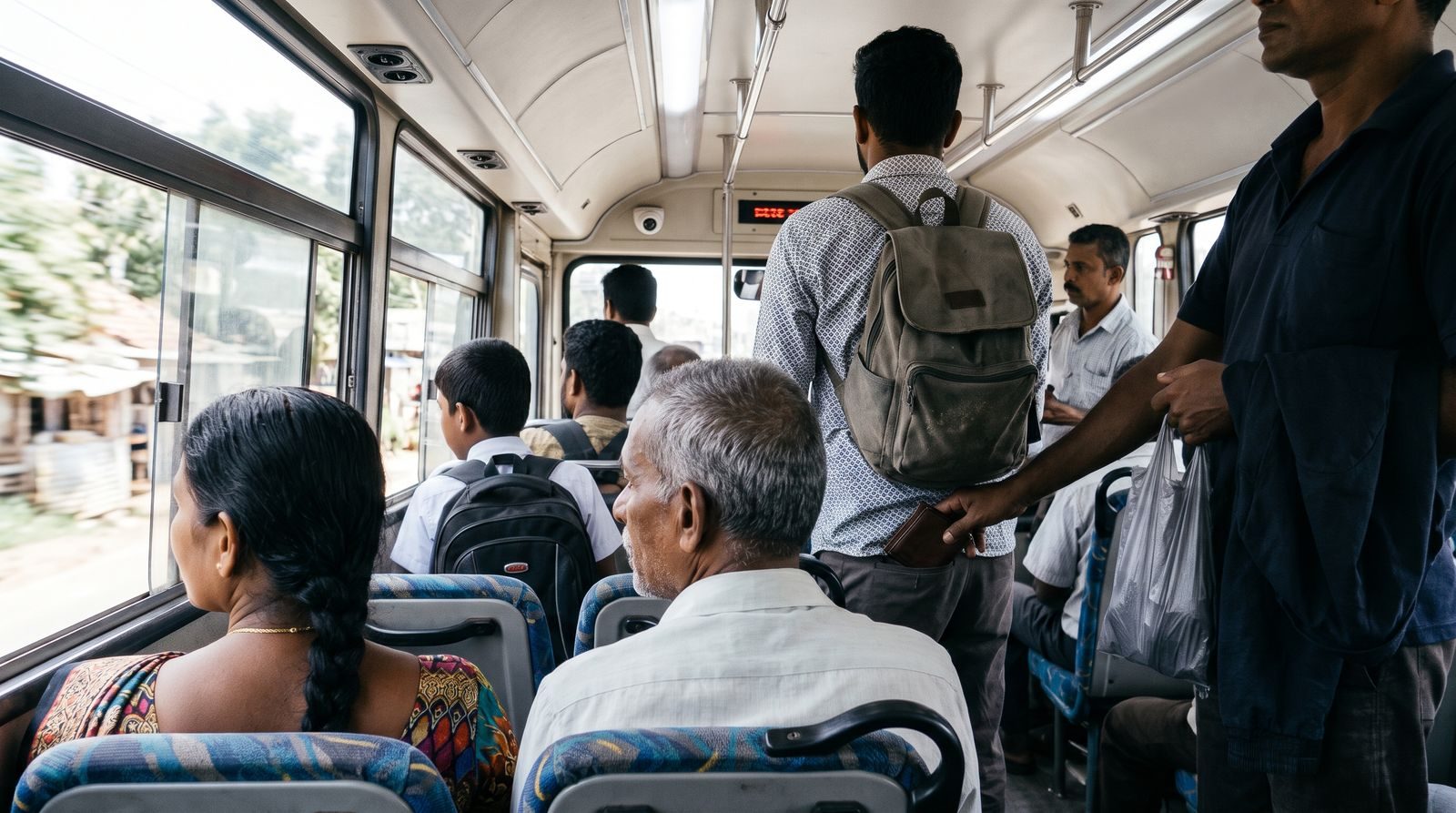
- Bag snatching: thieves on motorbikes snatch bags in towns. Carry bags on the side away from the road and keep your passport and cards in a body belt or a zipped inner pocket.
- Card fraud: use ATMs inside banks or hotels where you can, check street ATMs for anything stuck on the card slot, and keep your card in sight when you pay.
- Tuk-tuk fares: agree the price before you set off, or choose a tuk-tuk with a working meter or book through a ride app.
- Drinks: don't accept drinks from strangers or leave yours unattended. Drinks are often poured without measures, so they can be stronger than you expect.
From experience
- A common approach: someone stops you with 'Do you speak English?', says they're not asking for money, then asks you to buy milk powder or medicine for a sick child.
- In the shop, the most expensive product is often chosen, and it may be resold afterwards. It's hard to back out once you're at the counter.
- If you want to help, it's kinder and safer to give through a temple, church, charity or someone you know locally.
Beaches, roads and trains
- Swimming: many beaches have dangerous surf or rip currents at certain times of year. Ask your hotel before swimming and only swim where local people do.
- Roads: driving can be erratic and accidents are common, especially at night. Motorbikes are particularly risky. If you hire a car and driver, use a company registered with the tourism authority.
- Driving yourself: you need an International Driving Permit (1949 convention) plus a Sri Lankan recognition permit from the Automobile Association of Ceylon in Colombo.
- Trains: it's tempting to hang out of the open doors for photos, but people have died doing it. Stay inside while the train is moving.
Renting a tuk-tuk or car
If you plan to drive yourself, including renting a tuk-tuk, check that your licence, permits and insurance cover the vehicle, and only drive where you feel confident. Our Getting around guide covers permits, tuk-tuk rental and tips for the road.
Flying a drone
- Visitors who bring a drone must request flying approval from the Civil Aviation Authority of Sri Lanka through its online drone approval portal before flying.
- Security clearance from the Office of the Chief of Defence Staff is also required.
- The only exemption is for very small drones (under 200g) with no camera, flown on private land with the owner's consent and below 150 feet.
- Each new location needs a fresh approval. Never fly near military sites, government buildings or airports.
Health
- Vaccines: check the TravelHealthPro page for Sri Lanka at least eight weeks before you travel, and talk to your doctor or a travel clinic.
- Mosquitoes: dengue and chikungunya are spread by mosquitoes, which bite during the day as well as at night. Use repellent and cover up, especially after rain.
- Animals: stray dogs are common and can carry rabies. Don't approach or feed them. If you're bitten or scratched, get medical help the same day.
- Wildlife: wild elephants and crocodiles occasionally attack people. Keep your distance and follow your guide's instructions in national parks.
- Medicines: some medicines that are legal at home are controlled in other countries. Check TravelHealthPro's 'medicines abroad' advice before you pack.
- Altitude and heat: the hill country is cooler, but the sun is strong everywhere. Drink plenty of water.
From experience: your tip here
- [YOUR TIP: drinking water (bottled, filtered, refill stations?) and anything you always pack for health, e.g. rehydration sachets or a basic first-aid kit.]
Insurance and hospital care
Emergency care outside the main cities is limited, and serious cases are often transferred to Colombo. Private hospitals are expensive and medical evacuation costs far more, so make sure your travel insurance covers medical treatment, evacuation and any activities you plan, such as diving or trekking.
Weather and disasters
Monsoon rains can cause flooding and landslides, and tropical storms occasionally hit. During the rainy seasons, check local news and the Disaster Management Centre's alerts before travelling on hill-country roads. See our Best time to visit guide for the seasons by region.
Other things to know
- Carry your passport or a copy of it; police may ask to see it.
- Don't take photos near military bases, government buildings or VIP convoys, and don't fly a drone without approval (see 'Flying a drone' above).
- Nude or topless sunbathing isn't allowed, and police can fine you for ignoring no-smoking or no-alcohol signs.
- Protests can start at short notice. Keep away from demonstrations.
- Same-sex sexual activity is illegal in Sri Lanka, though UK travel advice says it isn't aware of any prosecutions.
Sources
- UK FCDO travel advice: safety and security
- UK FCDO travel advice: health
- UK FCDO travel advice: getting help (emergency numbers)
- TravelHealthPro: Sri Lanka
- 1990 Suwa Seriya ambulance service
- Civil Aviation Authority of Sri Lanka: drones (including approval for visiting tourists)
- Civil Aviation Authority of Sri Lanka: FAQs on drone operations